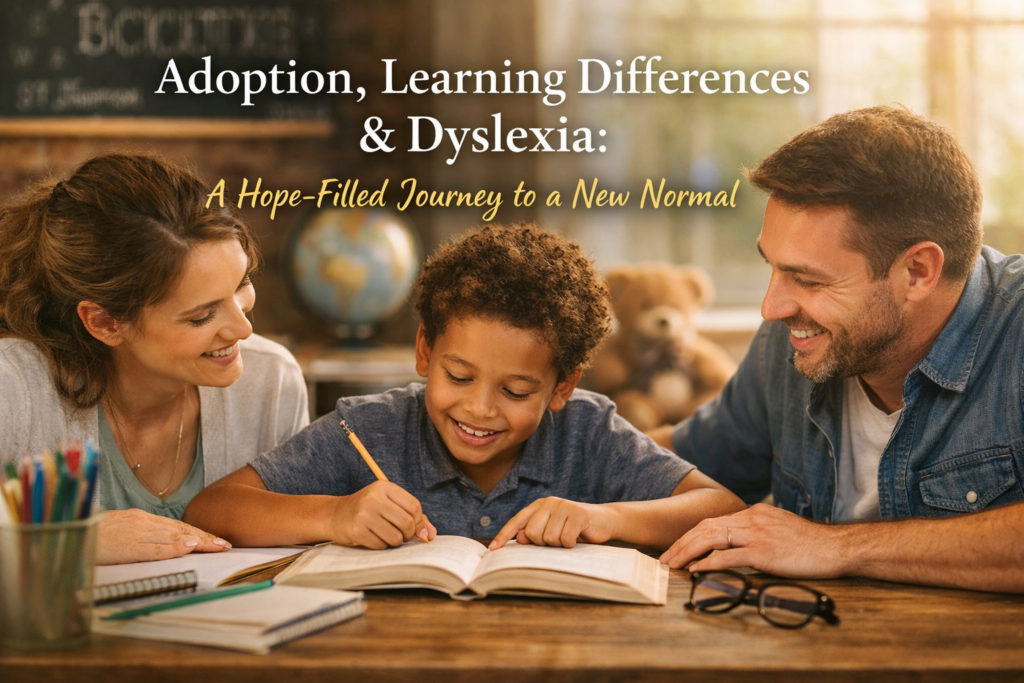
Adoption, Learning Differences and Dyslexia: A Hope-Filled Journey to a New Normal
Children who are adopted frequently come to their new families with narratives that early transitions, loss, or disorientation have shaped. These early experiences may shape brain development — particularly in attention, memory, and learning. In some adopted children, this might manifest as a learning difference like dyslexia.
Dyslexia is not an indication of intelligence or effort. It involves a difference in how the brain processes language, specifically reading and spelling. There are lots of kids with dyslexia who are creative, whose thinking is deep and beautiful — but who may need different learning approaches that work the way their brains do.
Understanding the Connection
Stress early in life or an unstable attachment can influence brain systems that help us learn and regulate. This is not to say that adoption causes dyslexia. Still, it suggests that children from adopted families may be more prone to such learning difficulties—particularly if their emotional safety has not yet been ensured.
When learning is difficult, children can internalize their frustration as shame. Trauma-informed support first seeks to establish safety and connection, understanding that a regulated nervous system is required for learning.
Supporting a Child with Dyslexia
Treating dyslexia is not about “fixing” a child — it’s about eliminating barriers and building confidence.
Helpful supports include:
- Structured, multi-sensory reading programs
- Consistent routines and clear expectations
- Vitality schooling (artistry, creation work, drama)
- More time and less pressure regarding reading-related tasks
- Psychological reassurance that not being able to learn is not a failure
- Progress can be slow, but with the proper tools, children with dyslexia can — and do — succeed in school.
The Part of Care Providers And Educators
The role of adoptive parents and educators is essential:
- Detaching a child’s worth from what they produce
- Advocating for appropriate educational accommodations
- Celebrating effort, not just outcomes
- Making mistakes seems like no big deal
- And the more children feel heard and supported, the more they can learn.
A Message of Hope
Adoption and dyslexia are not something for a child to outgrow or overcome. Given patience, informed support, and caring, children will grow into fluent readers with resilience and self-confidence. Sometimes, just believing in the child, especially on those hard days, can be the most impactful intervention.
Learning should not be compared with others. Whether the only cases of dyslexia reaching the courts were those featuring adopted children—and if not, why is broad recognition absent in other situations—is a topic for another feature.12