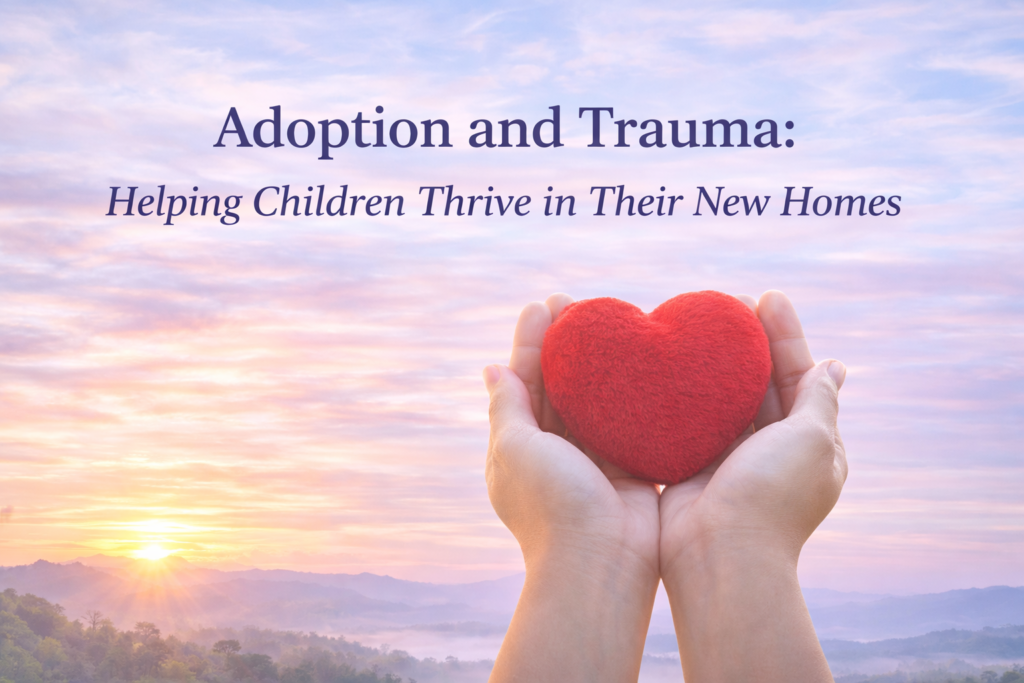
Adoption is a gorgeous act of love — and for many children, it comes on the heels of loss, instability, or trauma. That’s because welcoming a child into a brand new home is about providing safety, attachment, and the possibility of healing. Learning how early experiences in life affect emotions, behavior, and identity can enable caregivers to lay the groundwork for durable success.
The Collateral Damage of a Traumatized Child
Children experiencing neglect, abuse, multiple placements, or institutional care often bear these invisible scars. These early experiences impact the developing brain and nervous system, influencing how children perceive the world and respond to stress.
They have trust issues, regulation and identity issues, not because they don’t want to deal with those things, but because it’s what having survived in such uncertain safety requires.
Common challenges may include:
- Attachment and trust–inability to bond securely or fear of abandonment.
- Self-regulation: Overreaction, withdrawal, or shut down
- Behavioral changes: Becoming more disruptive or defiant, testing the rules
- Cognitive attention issues: Problems focusing on or controlling statements or impulses
- Grief and loss: Identity confusion, sadness of separation, or fear of further losses.
These reactions are not indicators of “bad behavior.” Those are adaptation symptoms — the child’s protective behavior in a scary world.
What Trauma-Informed Parenting Looks Like
A trauma-informed, adoption-competent model is grounded in safety, empathy, and connection. It knows we heal in relationships, not alone.
Safety and Predictability
You cannot protect children from the fallout of cancer, but you can give them consistency, gentle boundaries, and clear expectations. Predictability builds trust. When life stabilizes, the nervous system can begin to settle.
Instead of focusing primarily on discipline, understand the need behind the behavior. Refocus on what you know is needed (rather than the behavior) to address the behavior.
Statements like “you seem to be feeling scared at this moment,” or “I know that what’s happening is difficult for you” convey understanding and safety.
Relationship overrules
Connection is healing’s foundation. One-on-one time, reciprocal play, and reparation after conflict all contribute to reopening the child’s basic trust that relationships can be safe and lasting things. Emotional regulation skills.
Model calm breathing, create quiet spaces, or engage in sensory grounding activities, such as squeezing a stress ball, touching something soft, or voicing what they see. Help kids learn that large feelings can be experienced without fear. Supportive treatment.
Therapeutic Approaches to Trauma-Focused Cognitive Behavioral
Therapy or Dyadic Developmental Psychotherapy can help heal attachment and emotions for the provider. Choose a provider who is well-versed in both trauma and adoption. Honoring grief and identity * Even in the most loving adoptive homes, children may mourn their past. Let them discuss their birth parents, ask questions, or cry.
Their grief does not mean they are ungrateful; instead, it means they are working through various challenges. For transracial or transcultural adoptions, keep a connection to the child’s heritage through stories, community, and culture. The two worlds make them feel like they belong and help strengthen their sense of self.
Collaboration and Advocacy
Work with your child’s teachers, therapists, and other caregivers to ensure everyone is familiar with trauma-informed care. When a child is accepted across multiple environments, their permanence deepens. Care for the caregiver * Parenting children who have been wounded can be draining. Support groups, therapy, respite, and other resources are available.
When you see a child start laughing, accept comfort, or say ‘I love you’ without having to be afraid of something — that’s healing in motion. It can take time, months or years perhaps, but each small act of daily compassion slowly starts to repair the rupture that trauma created.
Because at the end of the day, adoption is more than just about providing a home.
It’s a matter of building a new home in the heart1
- National Library of Medicine. (2022). The Effects of Early Trauma on Adopted Children. https://pmc.ncbi.nlm.nih.gov/articles/PMC8926933 ↩︎