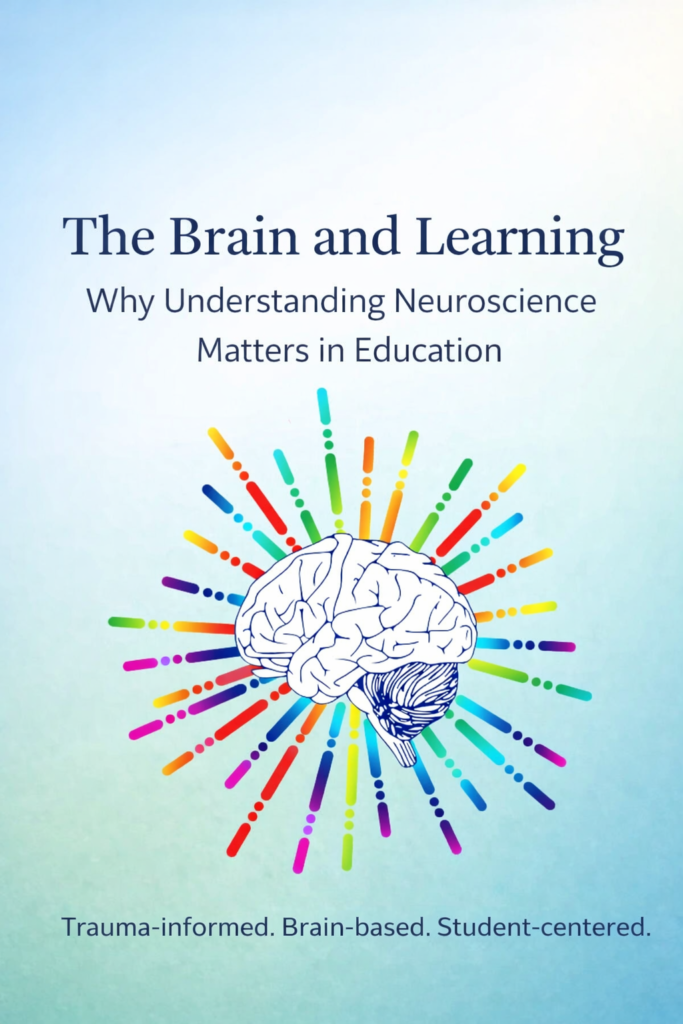
The Learning and Brain Debate: What Difference For Education?
Learning isn’t just academic — it’s neurological. All behavior, feelings, and academic skills result from complex interactions in the brain.
How the Brain Learns
The process of learning is mediated by a few different brain systems, including the following two important ones:
- Prefrontal cortex – involved with executive functions such as focus, planning, impulse control, and decision making.
- Hippocampus – Memory and learning retention center.
- Amygdala – Emotions and threat detection
When we regulate these systems and support them, learning comes easily. Learning can jam when young brains are overloaded, especially by stress or trauma.
Stress, Trauma, and the Brain
Long-term stress and trauma turn on the brain’s survival response. This is not a lifestyle choice or a behavior issue — it is biology.
When a student perceives danger:
- The amygdala becomes hyperactive
- The hippocampus has a difficult time encoding new memories
- The prefrontal cortex shuts down, impairing reasoning and self-regulation.
This is why students who are traumatized can be inattentive, defiant, or withdrawn. Their brains are choosing survival over school. Prolonged exposure to stress literally resets neural pathways, especially in developing brains, according to research supported by the National Child Traumatic Stress Network.
Neuroplasticity: The Brain Can Change
Neurons fire during thinking, the brain reorganizes itself all the time, and Homo sapiens’ greatest neuroscientific discovery is that every experience alters your brain somewhat.
This means:
- Their trauma does not forever shape a student’s potential
- Supportive relationships can reprogram stress responses
- Safe, predictable environments promote healing
According to evidence presented by the American Psychological Association, enhancing emotional well-being and wellness is reflected in stronger neural pathways that support learning and build greater resilience.
The Contribution of Relationships to the Developing Brain
By nature, human brains are relational. Attuned relationships with adults regulate stress hormones and promote healthy brain development.
In schools, this looks like:
- Predictable routines
- Emotionally responsive teaching
- Practices that heal rather than punish
- Those practices reduce nervous system activation and enable the prefrontal cortex to come back online, at which point learning can resume.
Why This Matters for Education
This results in schools labeling neurological stress responses as behaviour or motivation issues. When we come to a better understanding of how the brain works, behavior is recast as communication, not defiance.
Brain-informed education:
- Improves academic outcomes
- Reduces disciplinary disparities
- Supports mental health and equity
- Aligns with federal education protections
What Now: Teaching the Brain, Not Just the Lesson
Brain-honoring education understands that one cannot learn without safety, connection , and regulation. When schools bridge the gap between policy and practice through neuroscience, they inch closer to educating the whole child—and not just a test score.123
Learning about the brain is not a layer of education added on top; it’s the foundation.
- American Psychological Association. (2020). Stress effects on the body. https://www.apa.org/topics/stress/body ↩︎
- Perry, B. D., & Szalavitz, M. (2017). The boy who was raised as a dog (Rev. ed.). Basic Books.
→ Provides neuroscience-based explanations of how trauma reshapes developing brains and how relational safety supports healing. ↩︎ - National Child Traumatic Stress Network. (n.d.). Effects of traumatic stress on children and adolescents. https://www.nctsn.org/what-is-child-trauma/trauma-types/complex-trauma/effects
→ Explains how trauma affects the amygdala, hippocampus, and prefrontal cortex, influencing behavior and academic performance. ↩︎